Pilates for athletes
Pilates for Athletes in Montreal
Pilates for athletes at MTLPILATES targets the blind spots of repetitive sport: muscular asymmetry, hip and spinal stiffness, and poor movement sequencing. Training on the full apparatus builds durability, explosive control and faster recovery.
Last updated
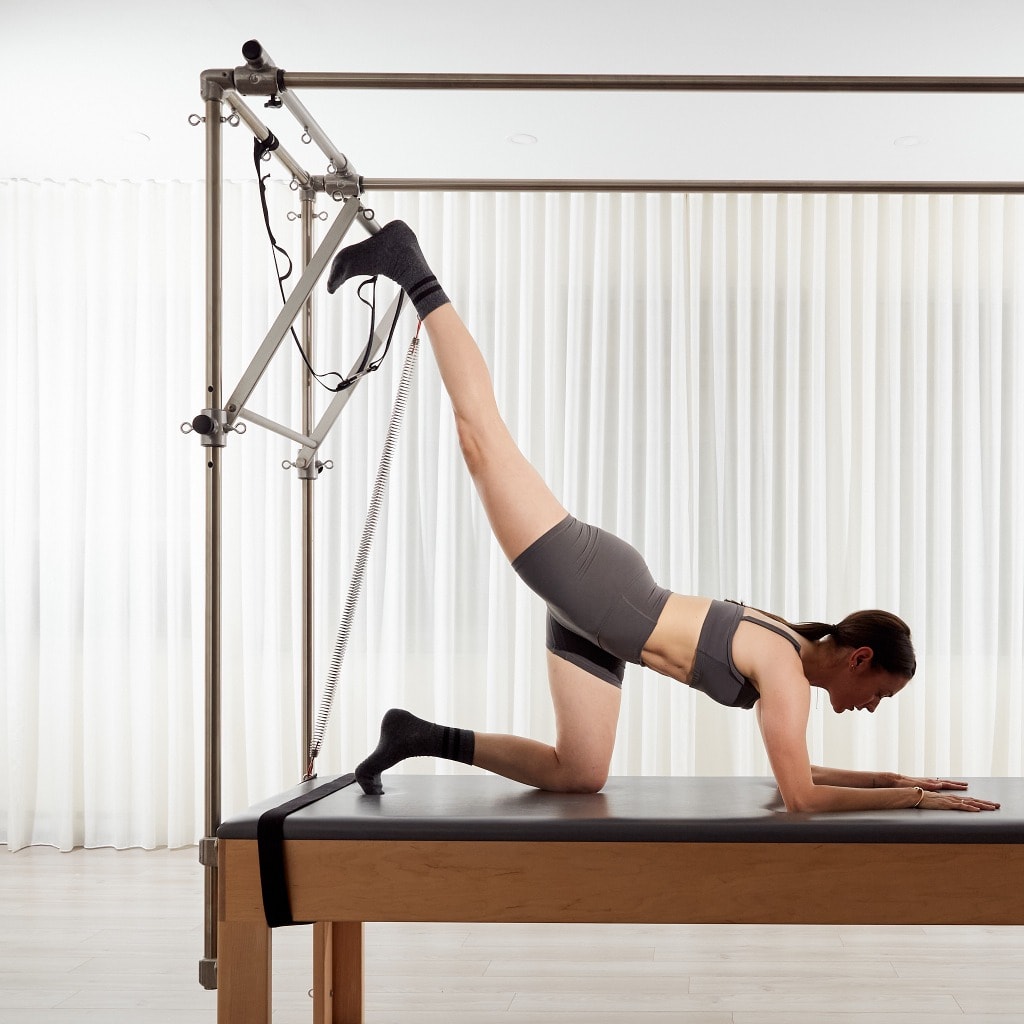
Why do athletes cross-train on the Pilates apparatus?
Because the spring scales the load. Resistance is set to your body and to the day you are having, so you can train strength, control and alignment through a full range of motion without adding more impact to a week that already has plenty.
This is cross-training, and it is honest about that. It does not replace your sport, your strength programme or your conditioning. It fills what those leave behind: the deep core and spinal muscles, the last few degrees at the end of a range, and the side of your body that quietly does less work.
Sessions are 50 minutes and supervised, in a small room rather than a large class, which is what makes it possible to change the plan on the day instead of running a fixed programme at you.
Which athletes have trained at MTLPILATES?
The studio has worked with professional football players; Olympic athletes, including divers, synchronized swimmers and skiers; and professional dancers, ice skaters, golfers, tennis players and basketball players.
Why Athletes Should Do Pilates
Every sport asks something different of the body. Some athletes need injury prevention. Others need stability, or mobility, or both. Pilates meets each requirement precisely—and with a full system of apparatus at their disposal, our instructors build the exact program your sport demands.
Where it fits in your year
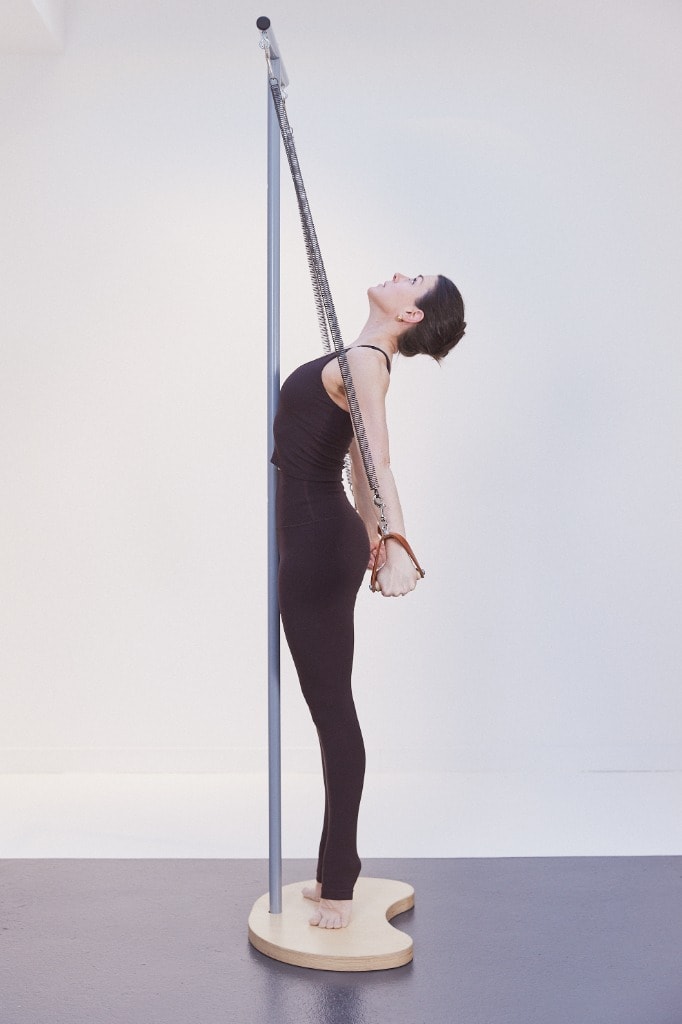
In season
Hold the range and the control you already have without buying fatigue you then have to recover from. The spring load is set to the day you walk in, and 50 minutes fits between the sessions that actually count.
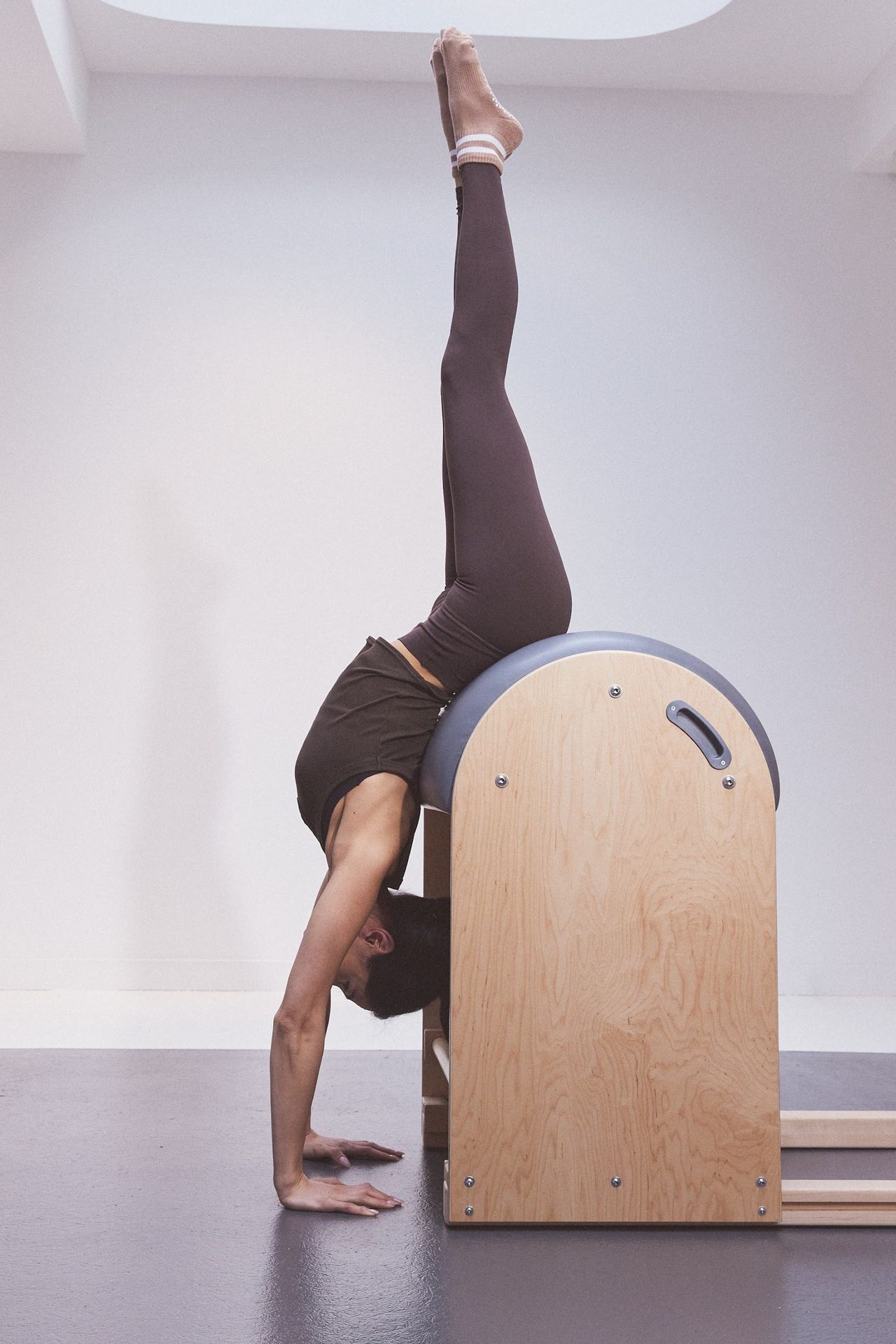
Between seasons
The window for the unglamorous work: the asymmetry, the end of the range, the stabilisers your sport never asks for. This is where working across the whole apparatus, rather than one machine, earns its place.
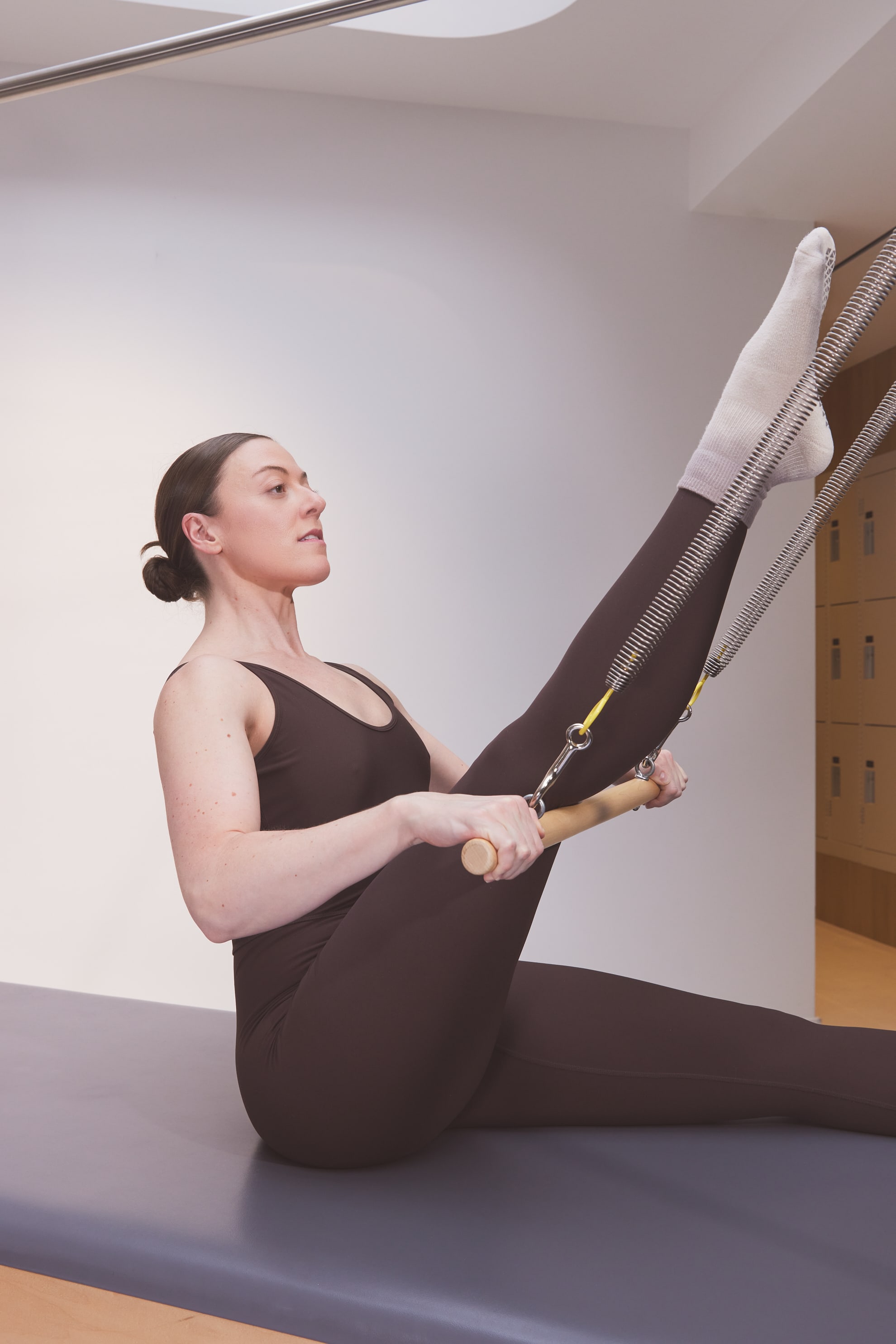
Coming back from injury
Private-first, and clearance from your physician or physiotherapist comes before the first session. Spring support carries part of your weight, so a joint can be loaded and re-trained well before body weight alone would be sensible.
How does the full apparatus find an asymmetry?
Each apparatus loads you differently, so a side-to-side difference has somewhere to surface. The Wunda Chair demands stability in a small base of support and exposes asymmetries the Reformer can hide. The Ladder Barrel mobilises the spine in extension, flexion and rotation. The Cadillac is taught in private sessions only.
That is the argument for a complete apparatus system taught as intended rather than a single piece of equipment. Reformer, Cadillac, Wunda Chair, Ladder Barrel and Mat each ask a different question of the same body, and an athlete who can compensate beautifully on one of them usually cannot on the next.
MTLPILATES teaches the full system, the way it was intended to be practiced. The full apparatus system explains what each piece does and where it is taught.
How do sessions fit around a competition schedule?
Pilates accompanies you through your busy season—working mostly on injury prevention, joint alignment, and keeping the deep stabilizers active. Off-season is when the full repertoire comes in: challenging joint stability against mobility, muscle length, and deep core strength, keeping you at peak fitness and ready to get back to play.
First-time clients can start with three private sessions for $225. If you are coming back from an injury or surgery, that work is private-first and needs clearance from your physician or physiotherapist before the first session, the rehabilitation page sets out how that pathway runs.
Good to know
Training questions
What are the benefits of Pilates?
Pilates improves posture by strengthening the deep core and spinal muscles, enhancing alignment and body awareness, increasing flexibility and spinal mobility, reducing neck and back pain and injury risk, and improving balance for everyday tasks. Most clinical programs showing measurable gains run 6 to 12 weeks with 2 to 3 supervised sessions per week.
Do I need experience to start Pilates at MTLPILATES?
No. Foundations, Reformer Level 1/2, is open to everyone, with no experience and no flexibility required. The studio recommends 4 to 12 classes at that level, mixed with Chair & Barrel, before moving up. The themed All Level classes each set their own entry: some ask for around five Reformer classes behind you, while Slow Aging is open to all ages and levels. Each class page says which.
What Pilates apparatus does MTLPILATES have?
MTLPILATES teaches the full apparatus system as intended: Reformer, Cadillac, Wunda Chair, Ladder Barrel and Mat, plus Spine Corrector, Pedipull and Spine Fitter. The Oov, a tool created by an Australian osteopath to activate the deepest stabilizing muscles, is used in group classes as well, in Chair & Oov & Props and in Oov & Mat. The Cadillac is taught in private sessions only. Working across the full system develops a more balanced and resilient practice.
Start with three private sessions, $225.
Three classes plus one free, or three private sessions for $225. Book online in minutes, no sales call.